
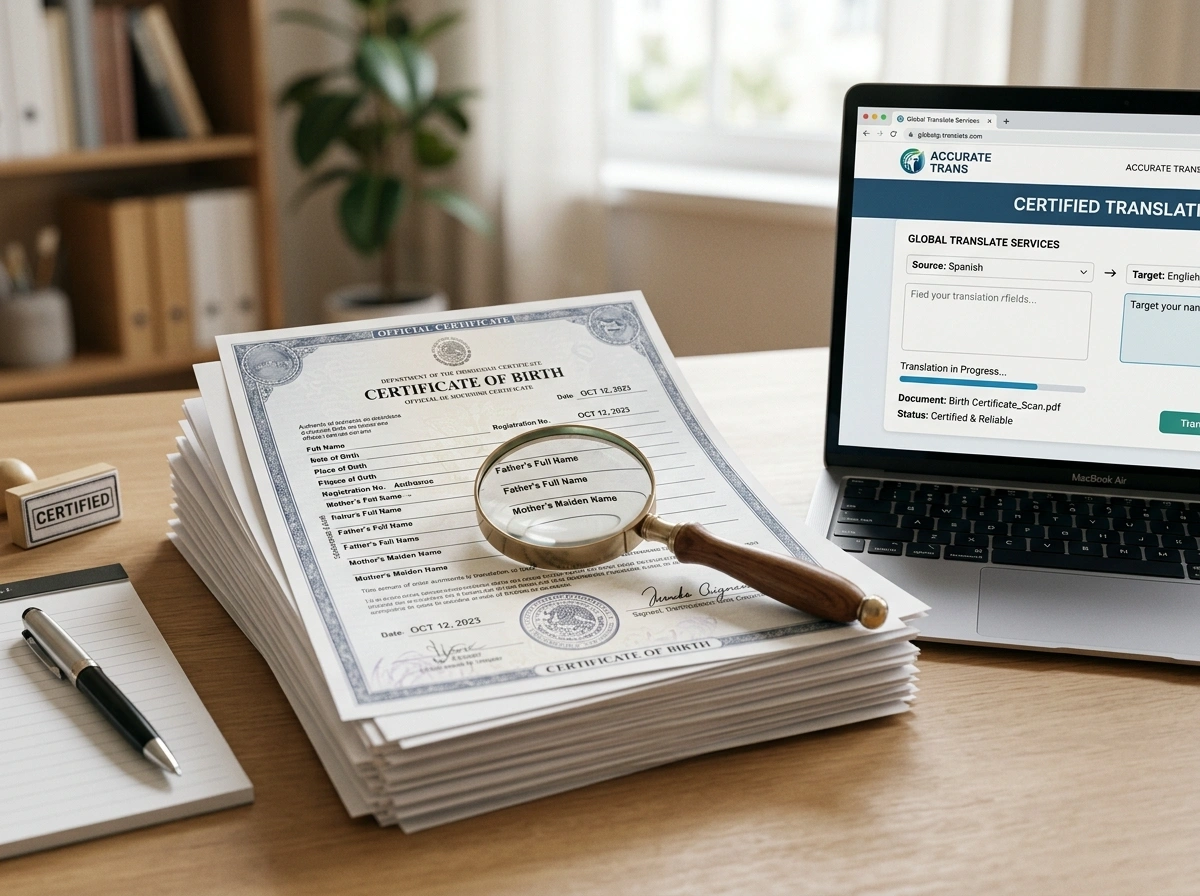
Navigating the paperwork for immigration, university admissions, or international marriages often feels like a marathon. One small error can cause massive delays. When you need to submit personal documents to government agencies or academic institutions, the language barrier is a common hurdle. You cannot simply translate the document yourself or ask a bilingual friend to help. Official organizations require certified translations to ensure authenticity and accuracy.
Finding the right professional for this job is a critical step in your application process. Handing over your most sensitive personal information requires trust. You need to know the agency will handle your data securely, translate every word accurately, and format the final document to meet strict legal guidelines.
This guide will explain exactly what to look for when choosing a translation service. We will cover the essential requirements for certified translations, the red flags that indicate a scam, and the specific standards demanded by organizations like the United States Citizenship and Immigration Services (USCIS). By the end of this article, you will have the knowledge to select a trusted provider and keep your application moving forward smoothly.
Why Accuracy and Certification Matter
A birth certificate is foundational. It establishes your identity, your age, and your citizenship. When government agencies review this document, they expect absolute perfection in the translation. A simple typo in a name, a mistaken date, or an incorrect location can trigger an immediate rejection of your application.
Certification adds a layer of accountability. A certified translation includes a signed statement from the translator or the translation agency. This statement affirms that the translation is a complete and accurate representation of the original document. Agencies like USCIS rely on this certification to trust the translated content. Without it, your document holds no legal weight.
Furthermore, some institutions require notarization on top of certification. A notary public verifies the identity of the person signing the certificate of accuracy. While not every submission requires a notarized translation, knowing the difference and having access to both services ensures you meet the specific demands of your receiving agency.
Key Criteria for Choosing a Trusted Translation Service
Selecting the right provider involves more than just picking the first result on a search engine. You need an agency with a proven track record. Start by looking for specialized expertise. The company should have extensive experience dealing specifically with legal and official documents.
Turnaround time is another crucial factor. Official applications often have strict deadlines. A reliable service will offer clear timelines, typically providing standard translations within 24 to 48 hours. Many top-tier agencies also offer expedited processing for urgent needs, cutting standard processing times in half.
Look at the languages they support. A robust agency will have native-speaking translators for dozens, if not hundreds, of language pairs. Finally, check for guarantees. A trusted provider will guarantee that their translations are accepted by major institutions like USCIS. If a service refuses to offer an acceptance guarantee, take your business elsewhere.
Understanding USCIS and Legal Requirements
The United States Citizenship and Immigration Services (USCIS) has very specific rules regarding foreign language documents. Any document containing foreign language submitted to USCIS must be accompanied by a full English translation.
The translator must certify that the translation is complete and accurate. They must also certify that they are competent to translate from the foreign language into English. USCIS does not require the translator to be certified by a specific organization like the American Translators Association (ATA), but using an ATA-member agency strongly boosts the credibility of your document.
If your birth certificate contains handwritten text or hard-to-read stamps, the translator must extract and translate this information accurately. High-quality services know how to format the translated document to mirror the original, making it easy for the immigration officer to compare the two. This attention to detail prevents administrative delays.
Red Flags to Avoid When Selecting a Provider
The translation industry has its share of unreliable operators. Knowing what to avoid is just as important as knowing what to look for. Beware of agencies that offer prices that seem impossibly low. High-quality translation requires human expertise, and professional translators charge fair rates for their skills. If a company quotes a price drastically below the industry average, they are likely using automated translation software without human review.
Lack of transparency is another major red flag. If a website does not clearly list its pricing, turnaround times, or contact information, proceed with caution. Hidden fees for standard services like certification or minor revisions should also cause concern.
Read customer reviews carefully. Look out for patterns of complaints regarding missed deadlines, rejected documents, or unresponsive customer service. A few negative reviews are normal for any business, but a consistent history of USCIS rejections means the agency does not understand legal translation standards.
The Importance of Confidentiality and Data Security
Your birth certificate contains highly sensitive personal information. Handing this document over to an unknown entity requires a leap of faith, but a professional agency will have strict protocols to protect your data.
Before uploading your document, review the company’s privacy policy. The website should use secure, encrypted connections (look for HTTPS in the web address) to ensure your files are not intercepted during transit.
Ask how the agency stores and deletes your files. Trusted providers use secure servers and restrict access to only the necessary personnel. They should also be willing to sign a Non-Disclosure Agreement (NDA) if requested. Never use a service that shares or sells customer data to third parties.
Comparing Cost vs. Quality in Translation Services
Budget is always a consideration, especially when application fees are already high. However, choosing the cheapest translation option can end up costing you much more in the long run. If a poorly translated document causes your application to be rejected, you will face new filing fees and months of additional waiting.
A professional birth certificate translation typically costs around $25 to $35 per page. This fee should include the certification statement. Additional services like notarization, hard copies, or expedited delivery will naturally add to the final bill.
When comparing providers, look for transparent, per-page pricing. This ensures you know exactly what you will pay upfront. Quality services invest in skilled human translators, multiple rounds of proofreading, and strict quality assurance processes. Paying a fair price for these safeguards is an investment in the success of your application.
How to Verify a Translation Agency’s Credentials
Before making your final decision, take a few minutes to verify the agency’s credentials. Look for affiliations with recognized industry organizations. Membership in the American Translators Association (ATA) is a strong indicator of professionalism and commitment to industry standards.
Check the company’s physical address and phone number. A legitimate business will have verifiable contact information. Call their customer support line to see how they handle inquiries. A prompt, knowledgeable response demonstrates that the company values its clients and understands the technical requirements of official translations.
Finally, ask for a sample of their work or check their website for examples of their formatting. The final product should look clean, professional, and closely resemble the layout of the original document.
Ensuring Your Documents Are Legally Accepted
Securing a certified translation is a vital step in your international journey. By understanding the strict requirements of organizations like USCIS, you can avoid common pitfalls and protect your application from unnecessary delays.
Prioritize accuracy, transparency, and data security over bargain-basement prices. Verify the agency’s credentials, read past customer reviews, and ensure they offer a clear guarantee of acceptance. Taking the time to research and select a trusted professional ensures your documents speak clearly, universally, and legally. With the right translation partner, you can submit your paperwork with total confidence.
