
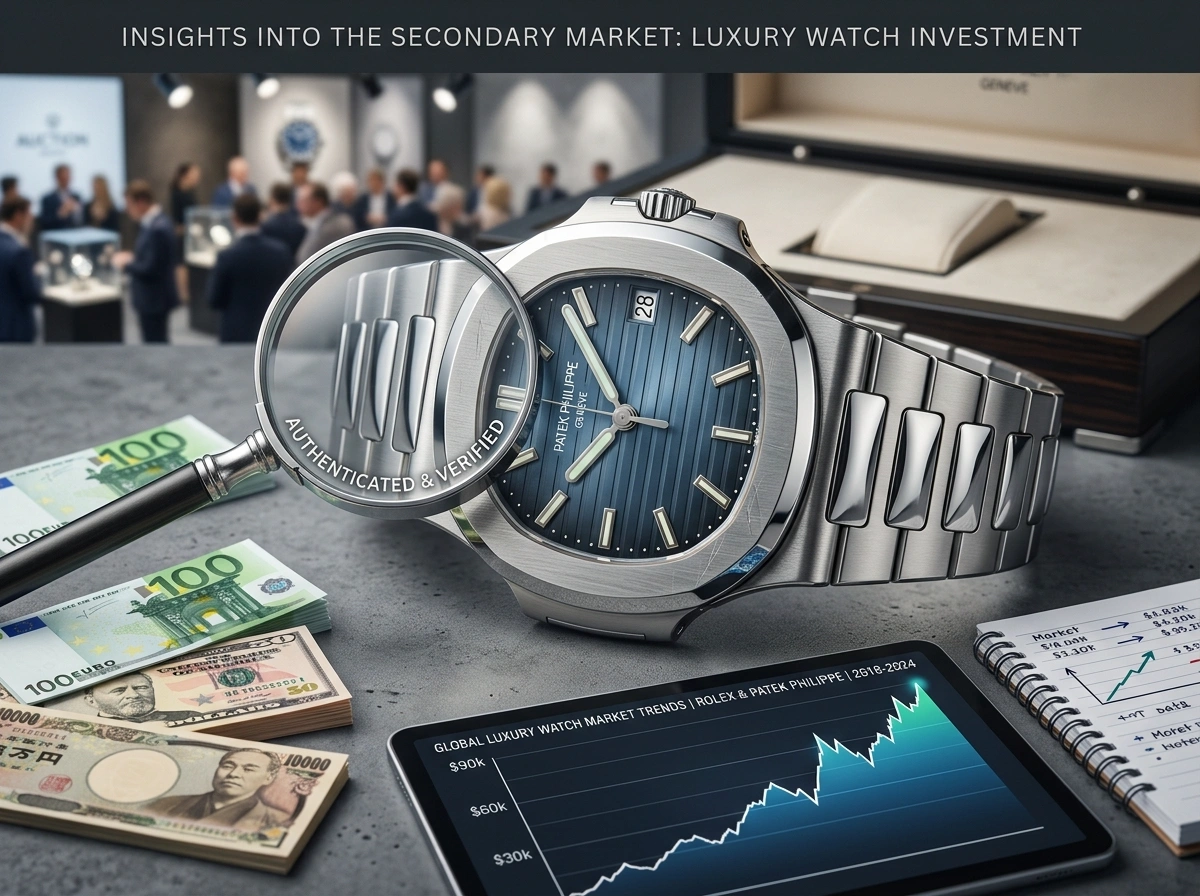
A pre-owned Rolex can sell for more than its retail price. A discontinued Patek Philippe can double in value within a few years. These outcomes confuse newcomers, but they make perfect sense once you understand the machinery behind the resale world. The secondary market for luxury watches is not random. It runs on clear rules, established players, and predictable forces.
In this guide, you will learn how supply and demand shape prices, how experts authenticate timepieces, why condition matters so much, and where buyers and sellers actually meet. You will also pick up practical tips to protect yourself from costly mistakes. Whether you collect, invest, or simply admire fine watches, this breakdown will help you read the market with confidence.
What the Secondary Watch Market Actually Is
The secondary market covers any luxury watch sold after its first retail purchase. That includes pre-owned pieces, vintage models, and even unworn watches resold at a premium. It exists separately from authorized dealers, who sell brand-new stock straight from the manufacturer.
This market matters because demand often outpaces official supply. Brands like Rolex, Audemars Piguet, and Patek Philippe limit production. When buyers cannot get a model new, they turn to the resale world instead. That pressure creates a thriving ecosystem of dealers, platforms, and collectors.
So if you have ever wondered why a “used” watch costs more than a new one, the answer is simple: scarcity drives the whole system.
Supply and Demand: The Engine Behind Prices
Every price in this market reflects a tug-of-war between availability and desire. When a model is scarce and wanted, its value climbs fast.
Several factors tighten supply:
- Limited production runs that brands intentionally control
- Discontinued references that can never be made again
- Long waitlists at authorized dealers, sometimes lasting years
- Hype cycles fueled by celebrities, collectors, and social media
Demand shifts too. A model can sit quietly for years, then surge when a new movie, athlete, or trend puts it in the spotlight. The Rolex Daytona and the Patek Philippe Nautilus both saw values explode this way.
Here is the takeaway: a watch is only worth what the market will pay today. Prices can rise, but they can also cool when hype fades.
Authentication: Proving a Watch Is Real
Counterfeits are the biggest threat in this space, so authentication sits at the heart of every honest transaction. Experts examine details that fakes rarely get right.
A thorough check includes:
- Movement inspection to confirm the correct caliber and finishing
- Serial and reference numbers matched against brand records
- Dial, hands, and font analysis for tiny inconsistencies
- Case and bracelet weight since genuine metals feel substantial
- Documentation review of papers, warranty cards, and service history
The market for replicas keeps growing in sophistication. Some sellers even market high-grade imitations like super clone rolex watches, which look convincing at a glance. That reality makes professional verification essential before any serious purchase.
Trusted dealers often partner with independent watchmakers to confirm authenticity. Never skip this step, no matter how good a deal looks.
Condition Grading: Why Wear Changes the Price
Two identical models can carry very different price tags based on condition alone. Sellers and platforms use grading scales to describe wear honestly.
Common grading tiers look like this:
- New / Unworn: never used, often with stickers intact
- Excellent: minimal signs of wear, possibly light polishing
- Very Good: visible but minor scratches from normal use
- Good / Fair: heavier wear, dings, or replaced parts
Condition affects value in surprising ways. Among vintage collectors, an untouched dial with natural aging can be worth more than a freshly polished one. Over-polishing removes metal and erases factory edges, which serious buyers dislike.
The lesson here is clear: originality often beats “perfect.” Before you buy, ask exactly what has been repaired, replaced, or refinished.
Pricing Drivers Beyond Condition
Condition matters, but several other elements push prices up or down. Understanding them helps you judge whether a listing is fair.
Key value drivers include:
- Brand strength, with Rolex, Patek Philippe, and AP leading resale demand
- Box and papers, since a “full set” commands a premium
- Rarity, including limited editions and discontinued references
- Provenance, especially watches tied to famous owners or events
- Market timing, because trends shift quarter by quarter
A complete set with original packaging can add thousands to a final price. Provenance can multiply value further. A Rolex once owned by a notable figure may sell far above an identical model with no story attached.
So when you evaluate any watch, look past the metal. The paperwork and backstory often matter just as much.
Where Watches Change Hands
The secondary market operates through several channels, each with its own advantages and trade-offs.
Specialist Dealers
Established dealers buy, authenticate, and resell watches. They offer convenience and reduced risk, since reputable ones guarantee authenticity. You usually pay more for that peace of mind, but the protection is worth it for big purchases.
Auction Houses
Houses like Christie’s, Sotheby’s, and Phillips handle rare and historic pieces. Auctions create competitive bidding that can drive record prices. They suit serious collectors chasing trophy watches, though buyer’s premiums add to the final cost.
Online Marketplaces
Platforms connect buyers and sellers worldwide. Many now include authentication services to build trust. They offer wide selection and competitive prices, but you must still vet every seller carefully.
Private Sales
Collectors sometimes trade directly with one another. This route can offer better prices since no middleman takes a cut. The downside is higher risk, because you handle authentication and payment safety yourself.
The Risks Every Buyer Should Know
This market rewards knowledge and punishes carelessness. Before you spend, understand what can go wrong.
Watch out for these dangers:
- Counterfeits and frankenwatches built from mixed genuine and fake parts
- Misrepresented condition that hides serious flaws
- Stolen goods that could be seized later
- Payment fraud in unprotected private deals
- Volatile values that may drop after a hype cycle ends
Frankenwatches deserve special caution. These combine authentic and aftermarket components, so part of the watch is real while another part is not. Only a trained eye catches these blends.
The bottom line: treat every deal with healthy skepticism until proof says otherwise.
Buyer Best Practices for Smart Purchases
You can avoid most pitfalls by following a disciplined process. These habits separate confident buyers from regretful ones.
Apply these steps every time:
- Research the model and its typical market range before shopping.
- Buy from reputable sources with clear return policies.
- Insist on authentication, ideally from an independent expert.
- Verify the full set, including box, papers, and service records.
- Inspect in person when possible, or request detailed photos and video.
- Use secure payment methods that offer buyer protection.
- Keep records of every receipt, invoice, and certificate.
That means slowing down and doing the work. A rushed purchase is where most people lose money.
Conclusion
The secondary luxury watch market may look mysterious from the outside, but it follows logical rules. Scarcity and demand set the prices. Authentication separates genuine treasures from fakes. Condition, completeness, and provenance fine-tune value. Dealers, auction houses, online platforms, and private sellers each offer a different path to ownership.
Once you understand these forces, you stop guessing and start making informed decisions. Risks remain real, but careful research and trusted sources keep you safe.
Your next step is simple: pick one model you admire, study its market history, and learn what a fair price looks like. That single habit will sharpen your instincts and prepare you for every future purchase in this fascinating market.
