
Securing a top position on search engine results pages requires a calculated approach to building authority. For years, search algorithms have relied on links as primary indicators of a website’s credibility. When high-quality websites link to your content, search engines interpret these links as votes of confidence. The more authority these referring domains possess, the higher your own site climbs in the rankings.
However, earning these links organically is a notoriously difficult process. Traditional outreach campaigns require massive amounts of time, resources, and negotiation. You can spend weeks crafting the perfect email pitch, only to be ignored or asked for exorbitant placement fees. This friction has led many digital marketers to seek out alternative methods for acquiring powerful links quickly.
One of the most discussed, debated, and controversial tactics in the search engine optimization industry is the use of a Private Blog Network. By controlling a network of websites, SEO professionals can bypass the gatekeepers of traditional link building. They can place links exactly where they want them, whenever they want them.
This guide will examine the mechanics behind this strategy, offering an unbiased look at the advantages and disadvantages. We will explore the technical benefits that draw marketers to these networks, the severe risks involved, and the ethical guidelines set by major search engines. Understanding both sides of the equation is critical for making informed decisions about your digital marketing strategy.
Understanding Private Blog Networks
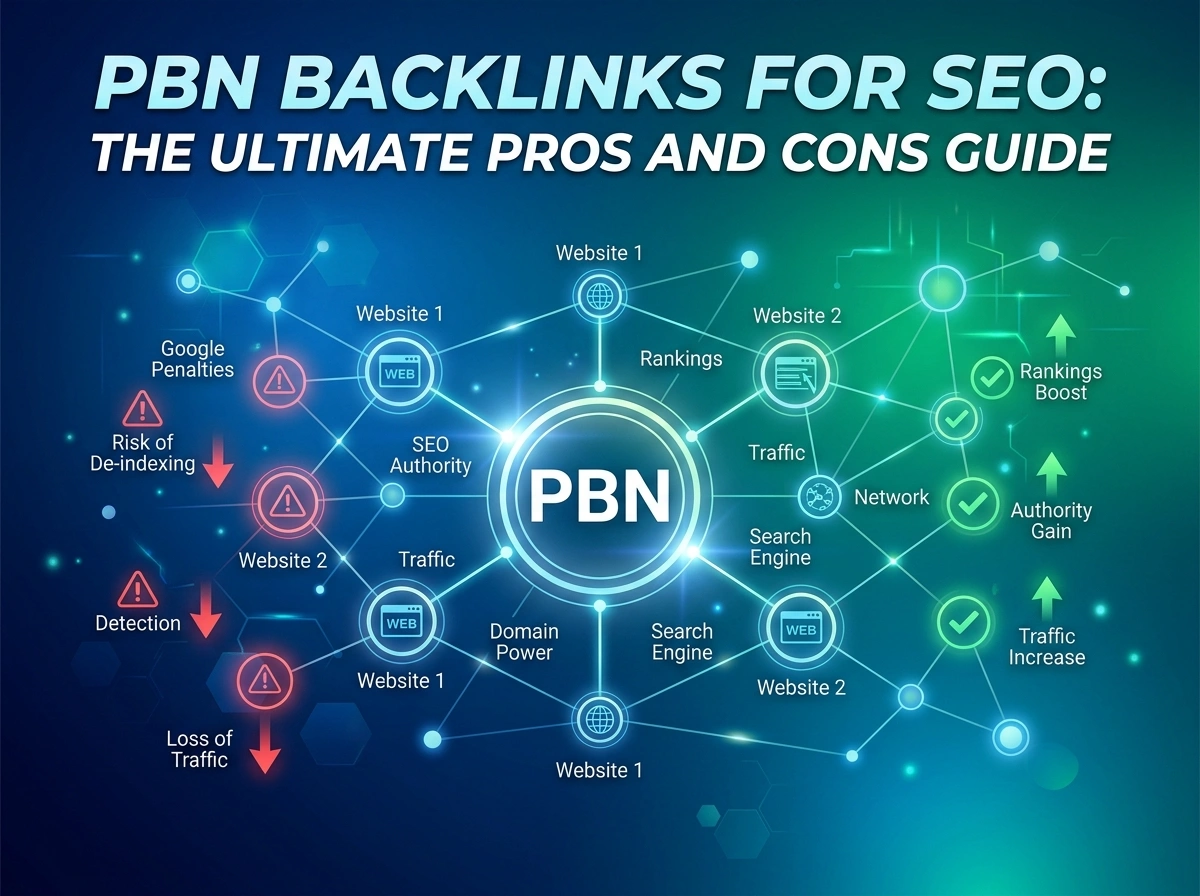
Before evaluating the benefits and risks, you must understand exactly how these networks function. A Private Blog Network (PBN) is a collection of websites built primarily for the purpose of linking outward to a central “money site.” The money site is the main business website that generates revenue, leads, or primary traffic.
These networks are almost exclusively built using expired domains. Every day, thousands of websites expire because their owners forget to renew the registration or abandon their businesses. Many of these expired domains possess rich histories. They might have been featured in major news publications, linked to by universities, or cited by industry experts.
When an SEO professional purchases one of these expired domains, they retain the link equity—also known as “link juice”—that the domain accumulated over its lifespan. The buyer then rebuilds a functional website on that domain and inserts a link pointing to their primary business site. Because the expired domain already holds significant algorithmic trust, that trust flows directly to the money site, resulting in higher search rankings.
The Pros of Using PBNs for SEO
The persistent popularity of this tactic stems from its undeniable effectiveness. When executed correctly, controlling your own linking environment offers several distinct advantages over traditional outreach campaigns.
Absolute Control Over Link Placement
The most significant advantage of utilizing these networks is the unparalleled level of control. In a standard guest posting or digital PR campaign, you rely on a third-party editor to approve your link. They might place it at the very bottom of the page, modify your preferred anchor text, or apply a “nofollow” tag that strips the link of its ranking power.
When you control the network, you dictate every element of the link. You decide exactly which article hosts the link and where the link sits within the HTML structure. You can ensure the link is surrounded by topically relevant keywords, maximizing its impact.
Precise Anchor Text Optimization
Anchor text is the visible, clickable text in a hyperlink. Search engines use this text to understand the context of the destination page. If you want to rank for “commercial plumbing services,” having links with that exact phrase is highly beneficial.
Earning exact-match anchor text naturally is incredibly difficult. Most organic links use branded terms or generic phrases like “click here.” By leveraging pbn backlinks, marketers can carefully craft their anchor text ratios. They can deploy exact-match, partial-match, and branded anchors with mathematical precision to achieve the optimal balance for search engine algorithms.
Rapid Ranking Acceleration
Organic link building is a slow burn. It can take months of relationship building and content creation to earn a handful of authoritative links. Even after earning the links, you must wait for search engine crawlers to discover, index, and process them before seeing any movement in your keyword rankings.
Network links bypass this waiting period. The domains used in these networks already possess established trust and crawl budgets. When a new link is published, search engines quickly index the page and pass the authority to the money site. This rapid injection of link equity can push a website from the third page of search results to the first page in a matter of weeks.
Bypassing Outreach Fatigue
The SEO industry is saturated with outreach emails. Webmasters at authoritative sites receive hundreds of requests for link insertions and guest posts every single week. This saturation has drastically lowered the success rates of traditional link building campaigns.
By building or utilizing an existing network, marketers eliminate the need to beg for links. They do not have to worry about low open rates, rejection emails, or exorbitant editorial fees. The link acquisition process becomes predictable and scalable, completely independent of third-party cooperation.
The Cons and Risks of Using PBNs
Despite the powerful benefits, utilizing these networks introduces severe vulnerabilities into your digital marketing strategy. The risks associated with this tactic can have catastrophic consequences for a business’s online visibility.
Severe Algorithmic Penalties
Major search engines possess highly sophisticated algorithms designed specifically to detect and neutralize manipulative link practices. Google’s Penguin update, initially rolled out in 2012 and now integrated into the core algorithm, operates in real-time to identify artificial link patterns.
If an algorithm detects that a website is benefiting from a manipulated network, the resulting penalty is often severe. The search engine may devalue the links entirely, causing your rankings to plummet overnight. In more severe cases, human reviewers may issue a manual action, completely removing your website from the search index. Recovering from these penalties requires extensive audits, link disavowal submissions, and months of waiting.
High Maintenance and Financial Costs
Building a safe, effective network requires a massive financial and operational investment. Purchasing powerful expired domains at auction often costs hundreds or thousands of dollars per domain.
Furthermore, you cannot host these websites on a single server. To prevent search engines from connecting the sites together, you must purchase distinct hosting accounts from different providers. You must use different domain registrars, implement unique IP addresses, and hide WHOIS registration data. Additionally, every site in the network requires high-quality, unique content to look legitimate. The ongoing costs of hosting, content creation, and technical maintenance quickly compound.
Leaving a Digital Footprint
Search engines employ thousands of engineers dedicated to uncovering network footprints. A footprint is any shared characteristic that links multiple websites together.
Common footprints include sharing the same Google Analytics code, using identical WordPress themes, publishing on the exact same date, or utilizing the same plugin configurations. Even the most careful SEO professionals occasionally make mistakes. A single configuration error on one website can expose the entire network. Once the search engine identifies the network, they will systematically penalize every money site connected to it.
Short-Term Gains vs. Long-Term Value
Links generated from these networks do not provide secondary business value. A link on a genuine industry publication might drive referral traffic, build brand awareness, and generate actual leads. Network sites exist solely for search engine manipulation. They rarely possess real human audiences.
Therefore, if the algorithmic value of the link is neutralized, the link becomes entirely worthless. Relying heavily on this strategy forces a business into a constant state of anxiety, always fearing the next major algorithmic update.
Ethical Considerations and Search Engine Guidelines
The debate surrounding this link building tactic inevitably touches on marketing ethics and platform guidelines. It is vital to understand how search engines view these practices to contextualize the risks.
Google’s Spam Policies
Google’s official Spam Policies explicitly prohibit the use of link schemes. The guidelines state that any links intended to manipulate PageRank or a site’s ranking in Google search results may be considered part of a link scheme and a violation of their guidelines.
This includes creating links that are not editorially placed or vouched for by the site’s owner. Because network links are entirely self-created for the express purpose of manipulation, they directly violate these terms of service.
The Agency and Client Dilemma
For digital marketing agencies, using these networks introduces a significant ethical dilemma. Agencies have a fiduciary responsibility to protect their clients’ business assets. Deploying a strategy that inherently violates search engine guidelines places the client’s primary source of revenue at risk.
If an agency uses these tactics without explicit client consent and the client suffers a penalty, the agency faces severe reputational damage and potential legal liability. Transparency is mandatory. Businesses must fully understand the risks associated with black-hat and gray-hat SEO techniques before approving their implementation.
Effective Alternatives to PBNs
Fortunately, you do not need to rely on high-risk networks to build a commanding organic presence. Several sustainable, guideline-compliant strategies can generate powerful backlinks and long-term business value.
Digital Public Relations
Digital PR involves creating newsworthy content, data studies, or unique tools, and pitching them to journalists and media publications. When executed properly, digital PR can secure links from some of the most authoritative domains on the internet, such as major news outlets and industry magazines.
These links are completely natural, highly trusted by search engines, and immune to algorithmic updates. Furthermore, digital PR placements drive massive amounts of referral traffic and significantly boost brand credibility.
Broken Link Building
The internet is full of broken links. Websites frequently restructure their pages, delete old content, or go offline entirely, resulting in dead links on authoritative sites.
Broken link building involves finding these dead links on industry-relevant websites, creating a superior piece of content to replace the missing resource, and contacting the webmaster to suggest your link as a replacement. Webmasters are highly motivated to fix broken links to improve their user experience, making this a highly effective, value-driven outreach strategy.
Expert Quotes and HARO
Journalists and bloggers constantly need quotes from industry experts to strengthen their articles. Platforms like Help A Reporter Out (HARO) or Help B2B Writers connect content creators with relevant experts.
By responding to these queries with insightful, valuable quotes, you can earn high-quality links from reputable publications. This strategy requires minimal financial investment and positions you or your brand’s executives as recognized thought leaders in your specific niche.
Strategic Guest Blogging
While mass-produced guest posting is discouraged, strategic guest blogging remains highly effective. This involves identifying the top publications in your industry and pitching highly valuable, original content for their audience.
The key is quality over quantity. Earning one link from a premier industry blog is infinitely more valuable than securing fifty links on low-quality, generic article directories. Focus on providing genuine value to the publication’s readership, and the authoritative link will follow naturally.
Making the Right Choice for Your SEO Strategy
Navigating the complexities of search engine optimization requires balancing ambition with risk management. Private Blog Networks offer an undeniably powerful mechanism for controlling link equity, accelerating keyword rankings, and dominating search results. The ability to dictate anchor text and bypass the frustrating outreach process is highly appealing to marketers operating in aggressive, hyper-competitive niches.
However, the foundation of this strategy is inherently fragile. The substantial financial investment required to maintain a footprint-free network is constantly threatened by the looming shadow of algorithmic penalties. A single manual action can erase years of progress, devastate organic traffic, and cripple a business’s revenue stream.
For businesses focused on sustainable, long-term growth, the risks simply outweigh the rewards. By investing resources into digital PR, expert positioning, and high-quality content creation, you can build a resilient backlink profile. These guideline-compliant strategies not only improve your search engine rankings but also elevate your brand reputation, drive targeted referral traffic, and protect your digital assets for years to come.
