
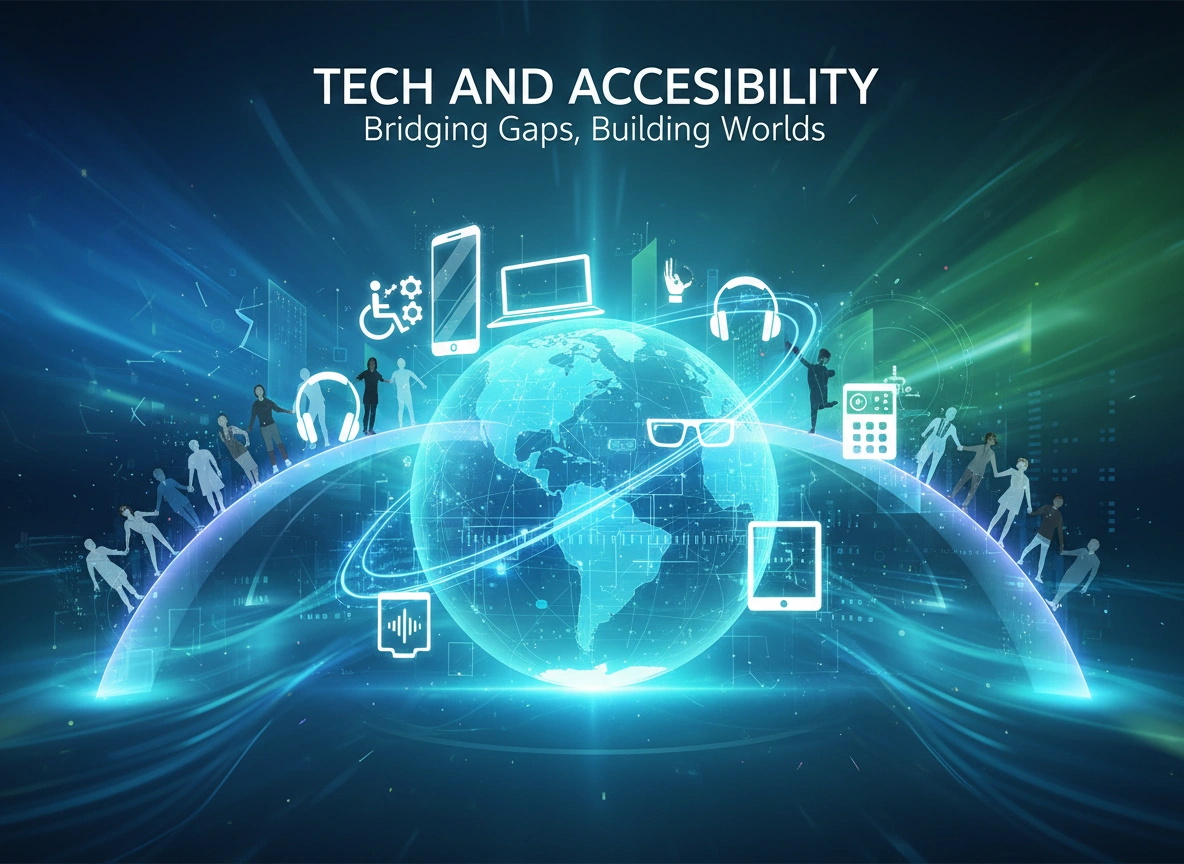
Technology is often seen as a force for productivity and entertainment. Yet, its most profound impact may be in its ability to break down barriers. For millions of people with disabilities, the elderly, and other underserved groups, technology is not just a convenience—it’s a lifeline. It enhances independence, fosters connection, and opens doors to opportunities that were once out of reach. From simple software adjustments to complex AI-driven systems, tech is actively reshaping our world into a more inclusive place.
This article will explore the critical role of technology in enhancing accessibility. We will look at specific assistive technologies, examine advancements in software and hardware, and see how emerging fields like AI and the Internet of Things (IoT) are creating more inclusive environments. We will also address the remaining challenges and look toward the future of accessibility tech.
The Foundation: Assistive Technologies
Assistive technology (AT) refers to any device, software, or equipment that helps people with disabilities work around their challenges. These tools have existed in some form for centuries, but digital innovation has expanded their capabilities exponentially.
For Visual Impairments
Technology has revolutionized how individuals who are blind or have low vision interact with the world. Screen readers are a cornerstone of this revolution. These software programs, such as JAWS (Job Access With Speech), NVDA (NonVisual Desktop Access), and Apple’s built-in VoiceOver, convert on-screen text and interface elements into synthesized speech or braille output. This allows users to navigate websites, write emails, and use complex applications independently.
Beyond screen readers, refreshable braille displays provide tactile feedback, enabling users to read digital text with their fingertips. Devices like the OrCam MyEye, a smart camera that attaches to glasses, can read text from any surface, recognize faces, and identify products, giving users a new level of awareness of their surroundings. Mobile apps also play a huge part, with tools like Be My Eyes connecting blind users with sighted volunteers through a live video call for visual assistance.
For Hearing Impairments
For the Deaf and hard of hearing community, technology has bridged communication gaps. Hearing aids have become smaller, more powerful, and smarter, with features like Bluetooth connectivity to stream audio directly from phones and TVs. Cochlear implants offer a more advanced solution for those with profound hearing loss, bypassing damaged parts of the ear to directly stimulate the auditory nerve.
Real-time captioning services, powered by both humans and AI, are now a standard feature in video conferencing platforms, online lectures, and streaming services. This ensures that live content is accessible to everyone. Furthermore, specialized devices can convert audio alerts, like a doorbell or fire alarm, into visual or vibrating signals, enhancing safety and independence at home.
For Mobility and Motor Impairments
Technology offers powerful solutions for individuals with physical disabilities that affect mobility and motor control. Voice recognition software, like Dragon NaturallySpeaking or the native voice assistants in our operating systems, allows users to control their computers, dictate text, and navigate the web using only their voice.
For those with limited or no use of their hands, eye-tracking technology is transformative. Devices from companies like Tobii Dynavox allow a user to control a cursor and type on a virtual keyboard using only their eye movements. Adaptive switches and alternative keyboards provide customized input methods for users with varying degrees of motor control. In the realm of physical mobility, advanced prosthetics and exoskeletons are using robotics and AI to offer greater function and a more natural range of motion than ever before.
Inclusive by Design: Advances in Software and Hardware
While specialized assistive technologies are vital, a major shift is occurring in mainstream tech: the integration of accessibility features directly into operating systems and everyday devices. This “inclusive design” philosophy means that products are built to be usable by the widest possible range of people from the outset.
Operating System Accessibility
Modern operating systems from Apple, Google, and Microsoft now come with a robust suite of built-in accessibility tools. These are no longer afterthoughts but core components of the user experience.
- Windows offers Narrator (a screen reader), Magnifier, on-screen keyboard, and voice control.
- macOS and iOS are widely praised for their integrated accessibility features, including VoiceOver, Zoom, Switch Control, and AssistiveTouch.
- Android provides TalkBack (a screen reader), Live Caption for system-wide audio, and Action Blocks for creating custom home screen buttons for routine actions.
By building these features in, companies reduce costs for users, ensure compatibility, and normalize the use of accessibility tools.
Web Accessibility Standards
The digital world is largely experienced through websites and applications. The Web Content Accessibility Guidelines (WCAG), developed by the World Wide Web Consortium (W3C), provide an international standard for making web content more accessible. These guidelines are organized around four principles, known as POUR: content must be Perceivable, Operable, Understandable, and Robust.
Following WCAG involves practices like providing alternative text for images, ensuring keyboard navigability, using proper heading structures, and offering captions for videos. While not universally enforced, these standards are increasingly becoming a legal and ethical requirement for businesses and organizations, pushing developers to create more inclusive digital spaces.
The Next Frontier: AI and IoT
Artificial Intelligence (AI) and the Internet of Things (IoT) are poised to take accessibility to the next level. These technologies are moving beyond simple commands and reactive assistance to create environments that are proactive and intelligently adaptive.
The Role of AI
AI is the engine behind many recent accessibility breakthroughs. AI-powered image recognition can now describe photos on social media to a blind user, providing social context that was previously missing. AI-driven natural language processing is making real-time transcription and translation more accurate and widely available.
Microsoft’s Seeing AI app is a prime example. It uses a smartphone’s camera and AI to read text, describe scenes, identify currency, and even recognize people and their emotions. This single app consolidates multiple assistive tools into one powerful, free package. AI is also making it possible to create more natural-sounding text-to-speech voices and to develop predictive text systems that help users with motor impairments communicate more quickly.
IoT and the Smart Inclusive Home
The Internet of Things—a network of interconnected devices—has the potential to create truly adaptive living spaces. For an elderly person living alone, IoT sensors can monitor for falls or unusual activity and automatically alert family or emergency services. For a person with mobility challenges, a smart home can be fully controlled by voice.
Imagine a home where the lights adjust automatically based on a user’s low-vision needs, where doors unlock as a wheelchair user approaches, and where the thermostat adjusts based on verbal commands. IoT devices like smart speakers, smart lighting, and smart appliances work together to automate tasks, reducing physical and cognitive load and empowering individuals to live more independently and safely.
Challenges and Future Opportunities
Despite incredible progress, significant challenges remain. The “digital divide” is still a reality; not everyone has access to the latest technology or the high-speed internet required to use it. The cost of specialized assistive devices can also be prohibitive, even with insurance or government assistance.
Furthermore, accessibility is often an afterthought in the rapid cycle of tech development. Many new apps and websites are launched without proper accessibility testing, shutting out users with disabilities. There is a continuous need for education and advocacy to ensure developers and designers prioritize inclusivity from the beginning of the design process.
Looking ahead, the opportunities are immense. Wearable technology could evolve to provide more sophisticated haptic feedback for navigation. Brain-computer interfaces (BCIs) could one day allow individuals with severe paralysis to control devices with their thoughts. As AI models become more powerful, they will be able to provide even more nuanced and context-aware assistance.
The ultimate goal is to create a world where technology is so seamlessly integrated and universally designed that the line between “assistive tech” and “tech” simply disappears. It is about building a future where everyone, regardless of ability, has the tools they need to participate fully in every aspect of life. Technology is not just enhancing accessibility; it is redefining what is possible.
Please click here for more info.
